
I write here, in the space between one breath and another, letter to letter. These are the conditions that resurrect my grandmother from the fragility of memory. I write here, not to invoke her in an attempt to memorialize her––that is, to make her permanent. The waters of her memory continuously sound in resonance and I find my ears bleeding from how loud they are. I write here, to begin with Teta. I begin with her, firstly as Mother, and secondly as Grandmother. With the former, I understand her as the birther of civilization––that is to say I have forever understood her as the Mother of Egypt. With the latter, I understand her as legacy.
In my attempt at legacy-making––and implicit in this I would assume, is some work on grieving––I [re]collect Teta as a mechanism for alternative archiving. I invoke Teta in lieu of assimilating a more canonical and perhaps a positively more homogeneous history. I invoke her in poetry and in prayer, in food and in sound to stimulate the goldilocks conditions that are necessary to resurrect and archive her. Though I am left frustrated, archiving someone who is no longer tangible, and collecting what is left for invention, and perhaps in an attempt to canonize Teta, I invoke her recipe for Kofta. It is here that Teta is rendered tangible––but also imaginary––and then again in writing, rendered communally. I am particularly interested in this manifestation of Teta because this recipe died with her, only made in the memory of her and never perfected; how can it be when all that is tasted is a memory?
In an attempt at [re]creating this recipe vis à vis my mother’s inheritance of it––albeit, by the same manner of my learning it: of listening, observing, and then again later, of [re]imagining it––I am left frustrated and faithful. Frustrated by the accuracy that is lost in its inheritance but also faithful in what is rendered anew aiding continuity, re/birth, and legacy. I offer here the recipe of my Teta’s Kofta. While it is nothing out of the ordinary, it is at the same time very special and very particular.
Teta’s Kofta
One Kilogram of minced meat.
Any kind of meat will do. My mother’s preferences are New Zealand and Australian, for reasons unbeknownst to me. I prefer Brazilian. In a bowl, add the minced meat with a diced onion and mix.
رشة
Salt, pepper, and coriander powder.
I do not know how to accurately translate /رشة/. Perhaps I could say a pinch of or, even better a sprinkle of. But, I worry about what gets lost in translation without the intonation of my mother’s sound [gesture] in /رشة/.
Sometimes my mother substitutes or adds on other ingredients for experimentation purposes. Here, she may substitute the coriander powder for seven spices, or add paprika. She says that she invents /بخترع/.
I find this to be both horrifying and exciting. On the one hand, since my grandmother’s ascension to heaven, her Kofta in the refuge of my mother’s hands have never once tasted like hers. On the other hand, I wonder what can be born again in the name of invention and experimentation. I wonder here, of legacy-making beginning at re-imagining and re-claiming, and what this would mean for archiving; for memory?
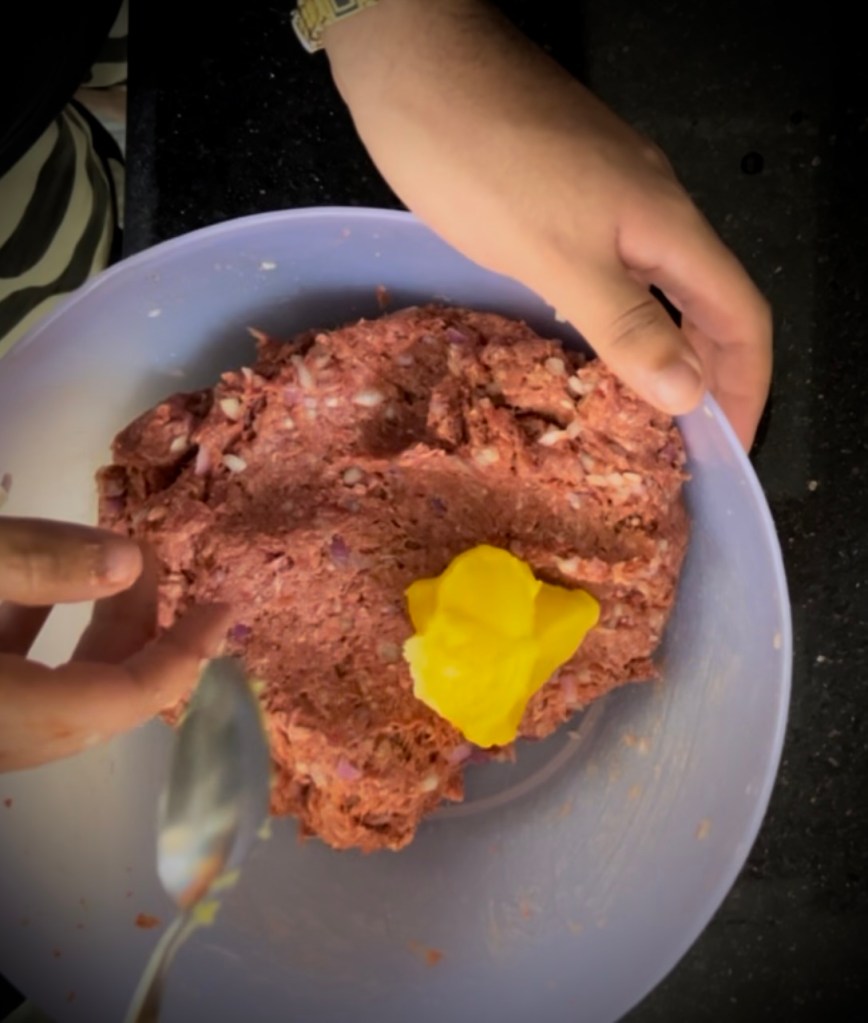
Two eggs.
Add two eggs into the bowl and mix by hand. My mother strictly cooks with brown-shelled eggs. My grandmother only had white-shelled eggs. I do not know the difference. When mixing, take the meat by the palm of your hand, flip it, and punch through it with your knuckles as though you were kneading life into the breath of memory.

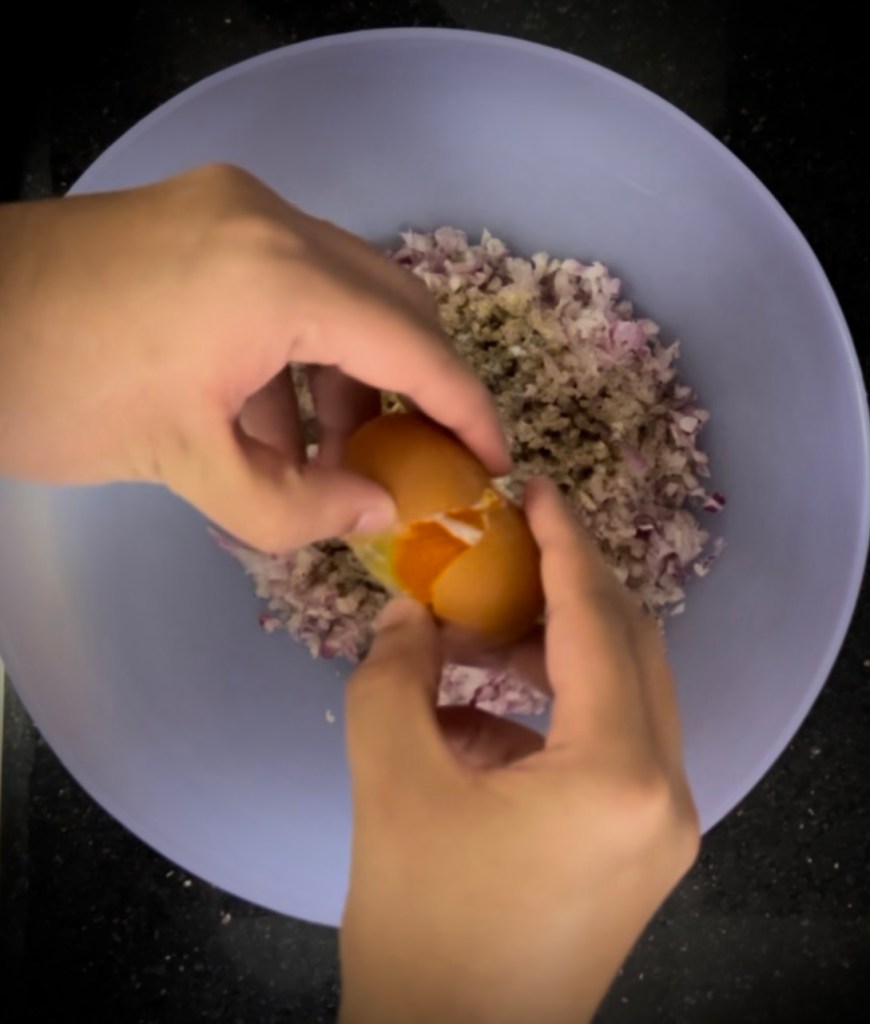
Here, I perhaps should enunciate why this recipe is special to me––other than it being a dish my grandmother made. Much like my mother’s Kishk––which is also its own unique recipe passed down to her by my mother’s aunt, and then again by her mother, and her mother––this was a dish that was prepared only twice a year by my grandmother: on Easter day and Christmas Eve dinner. Yet my mother and I make her Kofta whenever we feel like eating Kofta. There’s probably something else that unfurls in the function of memory when thinking of this dish––particularly of when my grandmother would make this dish––and when it would be enjoyed and shared. I am not sure what to make of this unfurling other than to reconcile it as something that occurs once ostensibly bodily, and then permanently and repeatedly in memory.
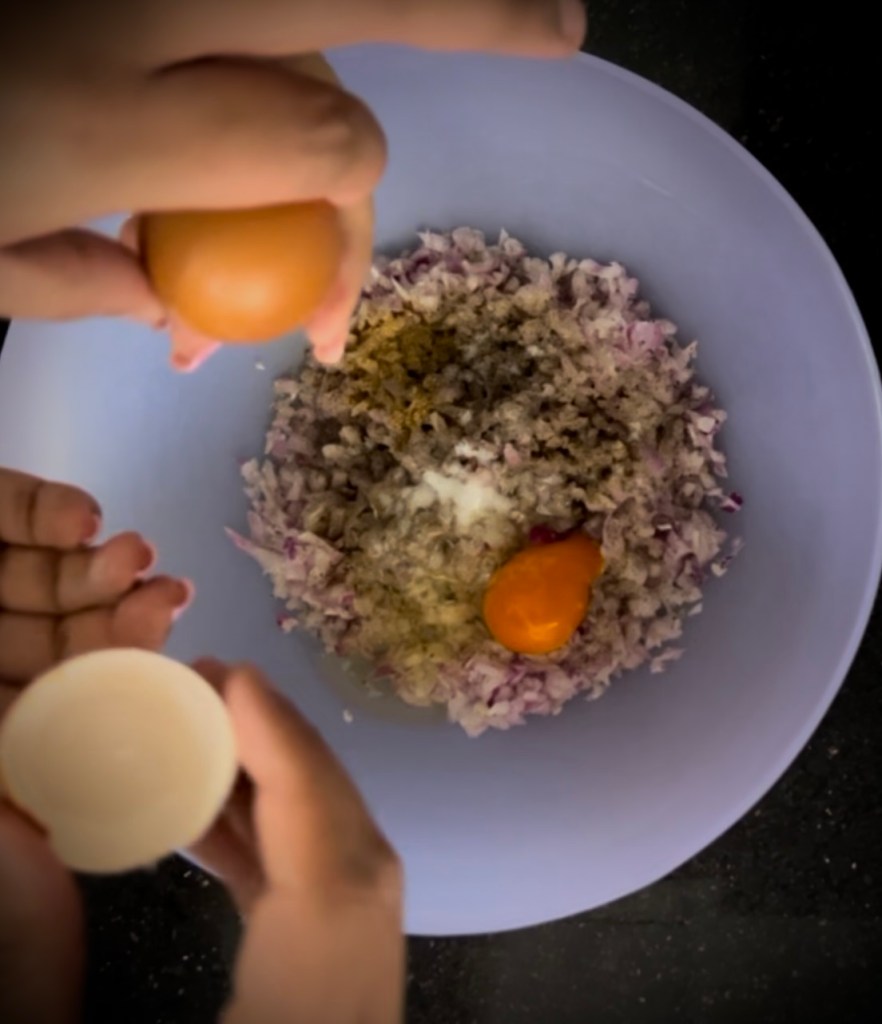
Two tablespoons of Ketchup.
When sharing and making this recipe communally with others, people are often surprised by the introduction of Ketchup and how it made its way into this recipe. I have absolutely no clue. I know that it makes it sweeter and dimensional and that much like other Egyptian recipes––and perhaps, the ethos of Egyptian recipes––it is not complicated and rather ordinary and yet houses a richness and depth that plays on the tongue.
Half a cup of breadcrumbs.
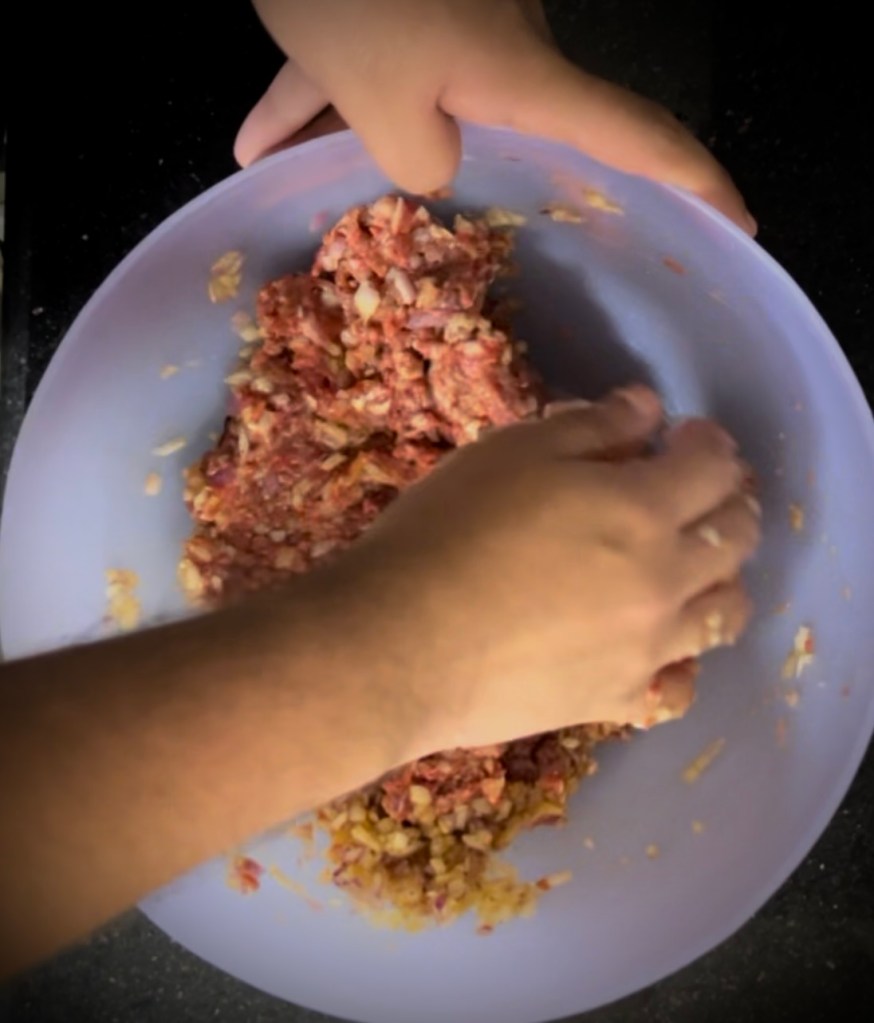
After mixing the meat with Ketchup, add about half a cup of breadcrumbs. Pour in about half of the cup and mix it in––again, by hand and kneading the meat––and pour in the remaining half. My mother has mentioned that at times, she also experiments here. Instead of breadcrumbs, she has incorporated Fino bread cut up and dipped in milk into the mixture. She says that it makes it taste different, softer even. I never would have thought to substitute the breadcrumbs with Fino bread dipped in milk. In a way, I find it quite radical in its attempt to further Egyptify a rather non-Egyptian recipe. That is of course, due to the Fino bread already being an Egyptified reconciliation of a French colonial origin. In this substitution, I find that this Kofta recipe takes shape anew, invoking my grandmother as Mother and Maker, but also as the ultimate witness to an un-writing of history from a Coptic Nubian Egyptian perspective. I wonder if my mother––in an act of pure experimentation and play––realized the breadth of history she both invoked and revoked.
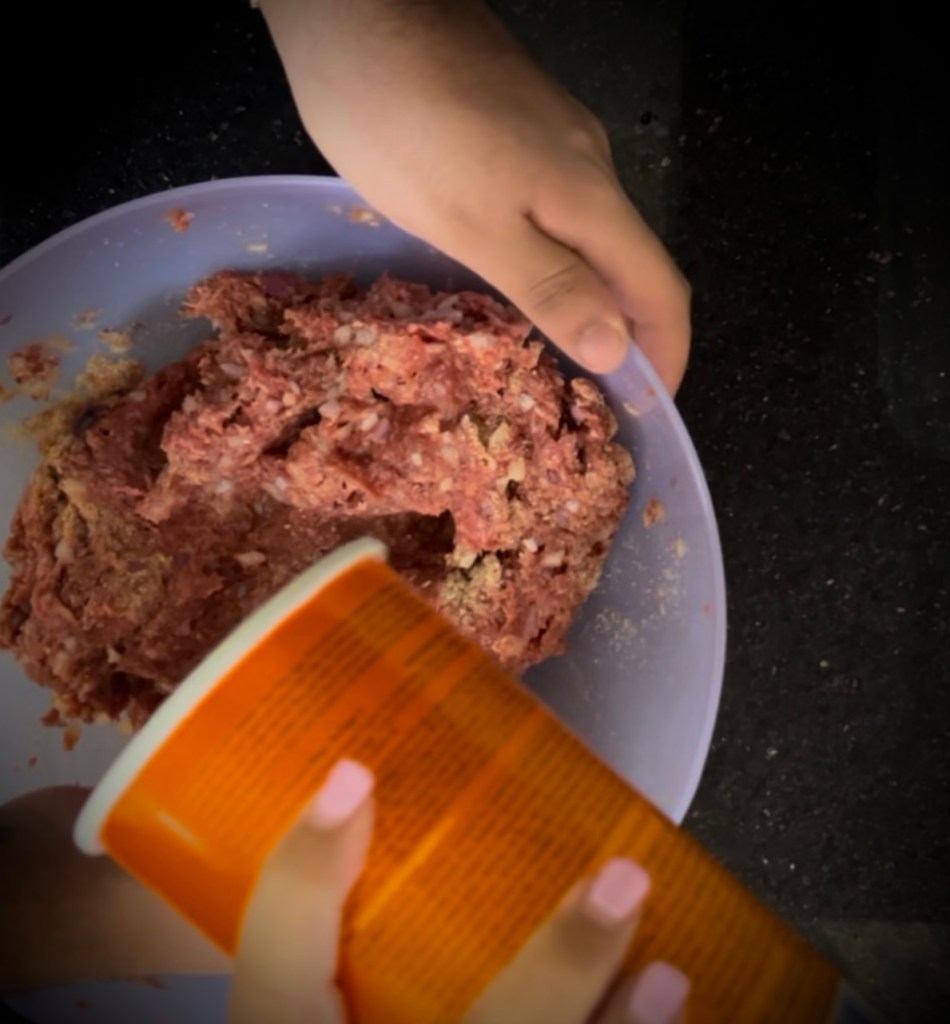
A tablespoon of ghee
Be generous with this. Ghee is a staple in Egyptian cooking and cuisine. I’ve used ghee when cooking savory dishes and desserts. I’ve used it as an additive to oil when frying. I’ve even used it instead of butter or oil to make eggs. Here, there really is very little attempt in striving to be the healthiest or most conscientious. Ghee just makes everything taste that much better. Once you’ve added a tablespoon, knead the meat again. Only this time, more firmly as though something unwritten is beginning to take shape. Once this is done, the meat is fully prepped and ready to be pieced and unpieced to make Kofta. If the meat batter is a bit too warm or not holding itself tight enough, refrigerate it for twenty or thirty minutes. Once ready, prepare a small bowl filled with oil. Dab your fingers into the oil and take off a piece of meat as we do when we slice lands, creating borders, round it up into a ball, then roll it sideways with the palms of your hand, and finally flatten it with your three middle fingers. This shaping process is critical for me, because the Kofta once fried will look more similar to a stretched meatball than it will an actual Kofta. This is the way my mother was taught by her mother and the way I was taught by my mother. For me, Teta exists somewhere between the making of and then again in the shape of this Kofta.
A tablespoon of ghee mixed with a tablespoon of corn oil.
Once all the Kofta pieces are plucked and pieced, heat a tablespoon of ghee and a tablespoon of corn oil on a frying pan. Cook the Kofta pieces for a period of 6-7 minutes each, flipping them on both sides at intervals or until cooked.
This serving size will make two full plates of Kofta. You can pair this with Egyptian flatbread and Tahini with some chopped onions, tomatoes, and what I think might be watercress /جرجير/––there are some words that exist either in English or Arabic and never together––or a side of a traditional green /بلدي/ salad. Or, whatever you like.
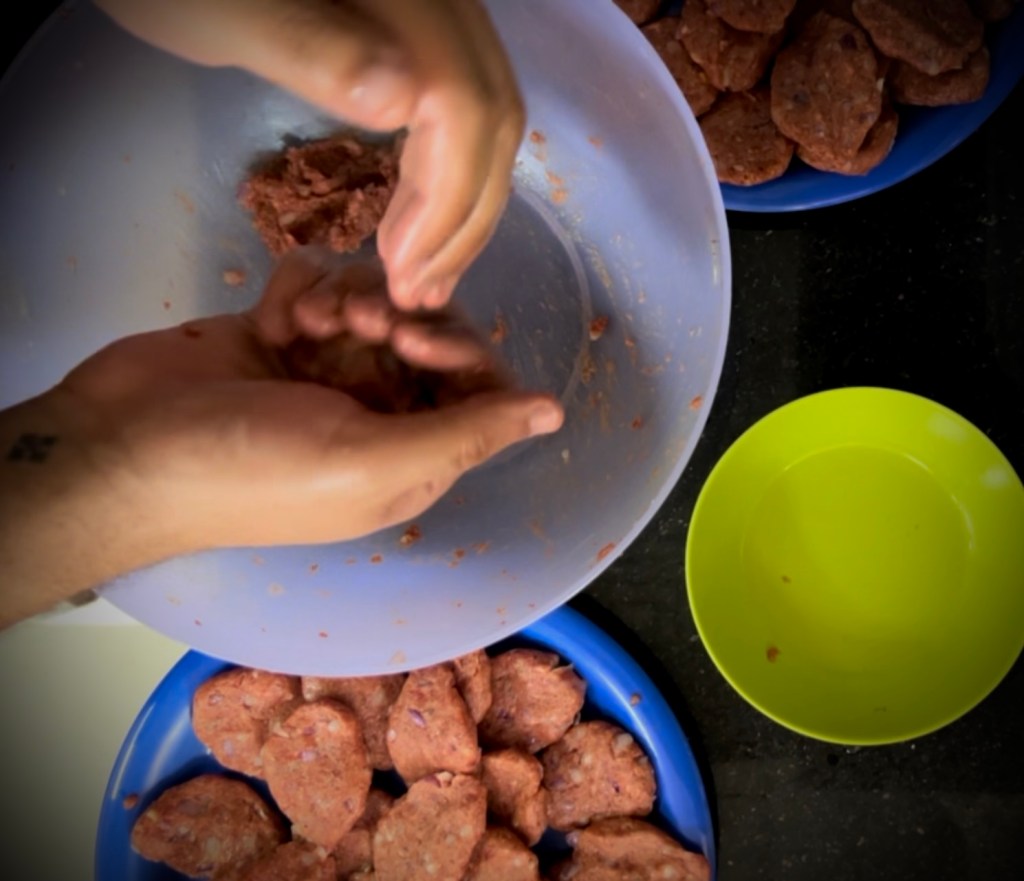
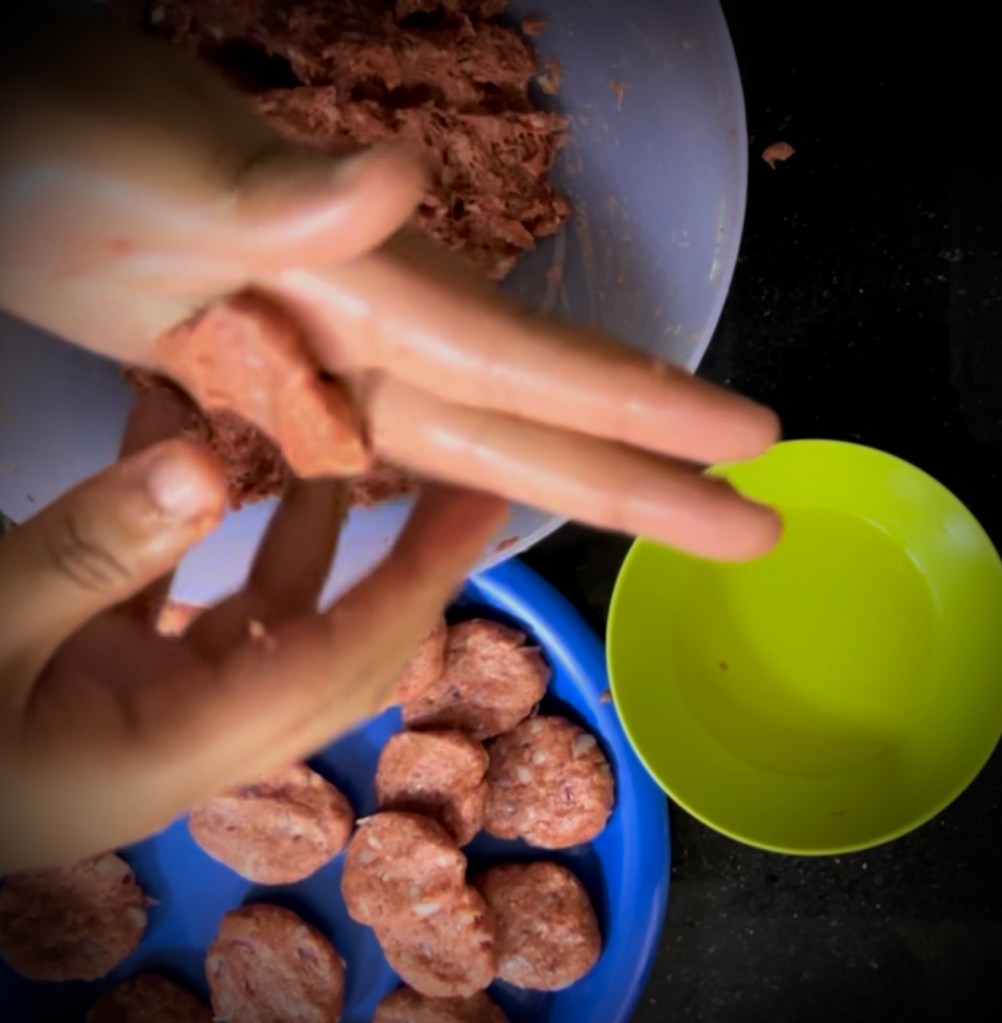
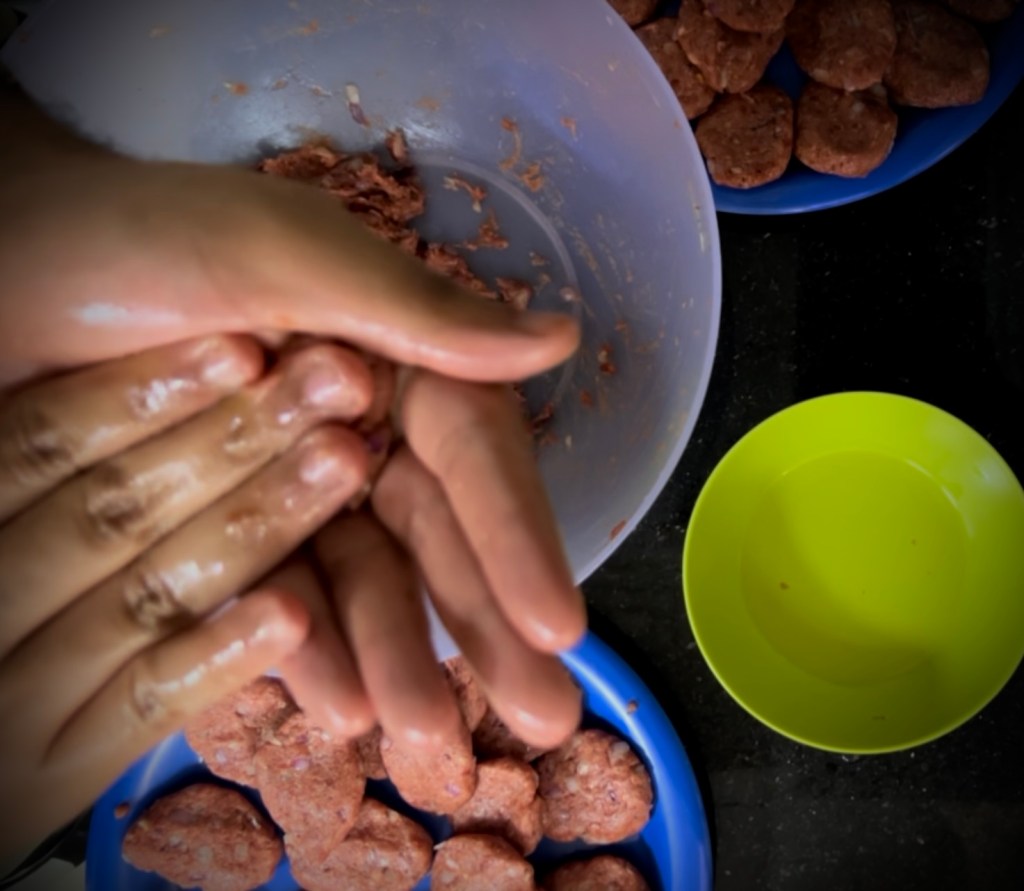
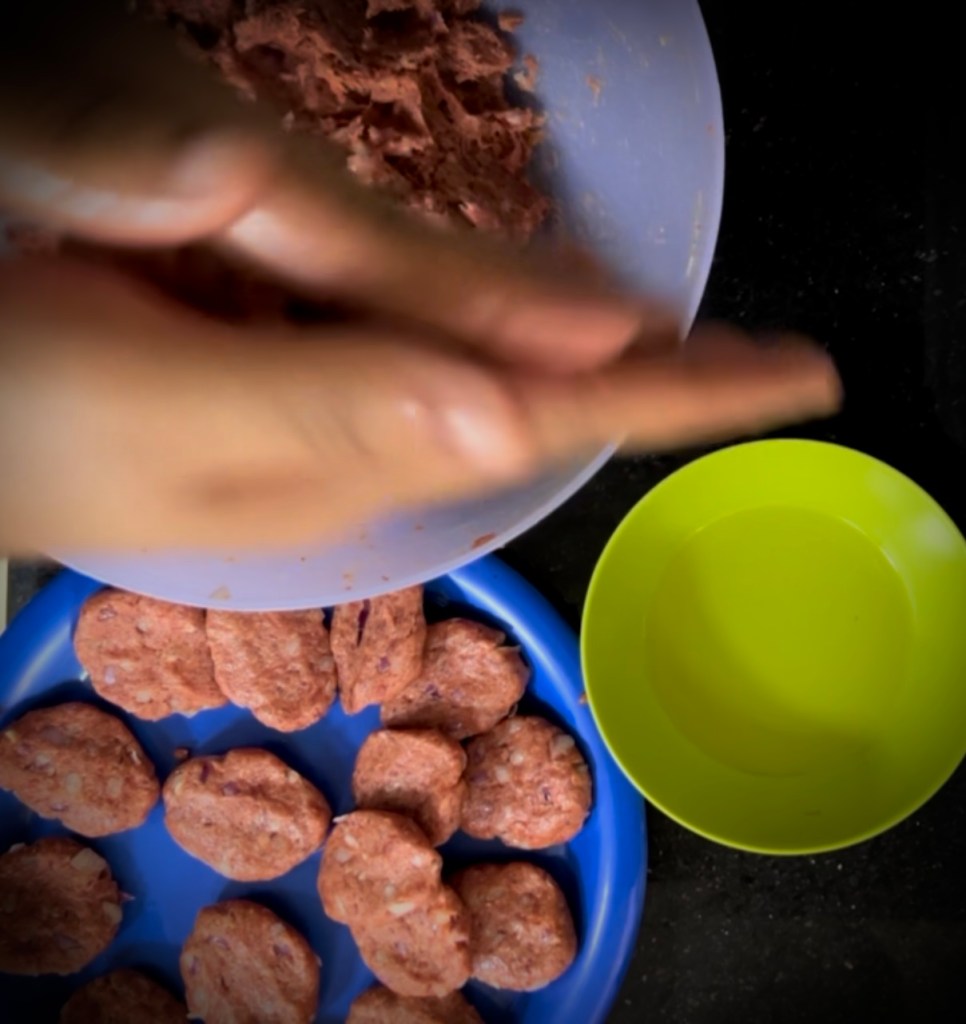
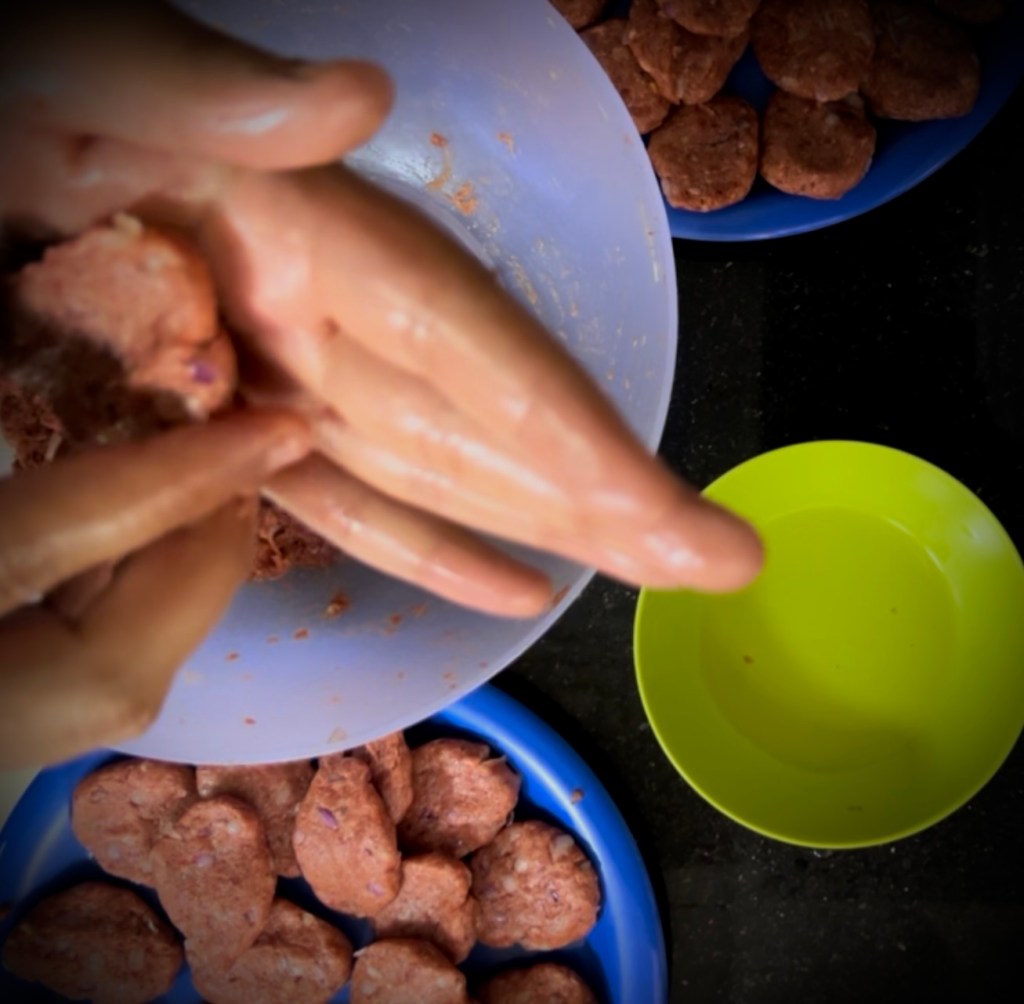
When I offered my Teta’s Kofta recipe during a few workshops I led that were centered around communal cooking and being, my mother was hesitant to share the recipe with me. While it is a rather ordinary recipe, my mother felt entitled to it by virtue of her inheritance. I share this recipe––with blessings from my mother––and transfer it from generations existing from mouth to mouth into worded language. I formalize it and with it my grandmother and her legacy to say that my grandmother too is here.
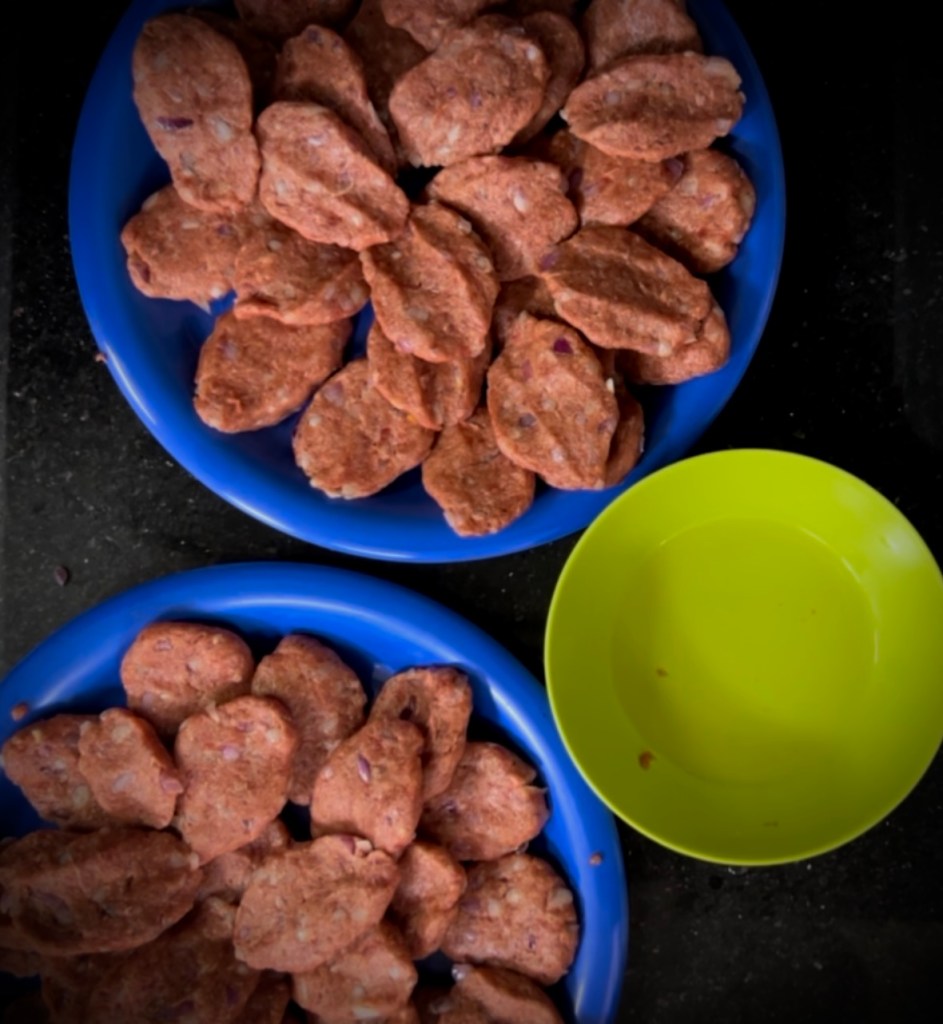
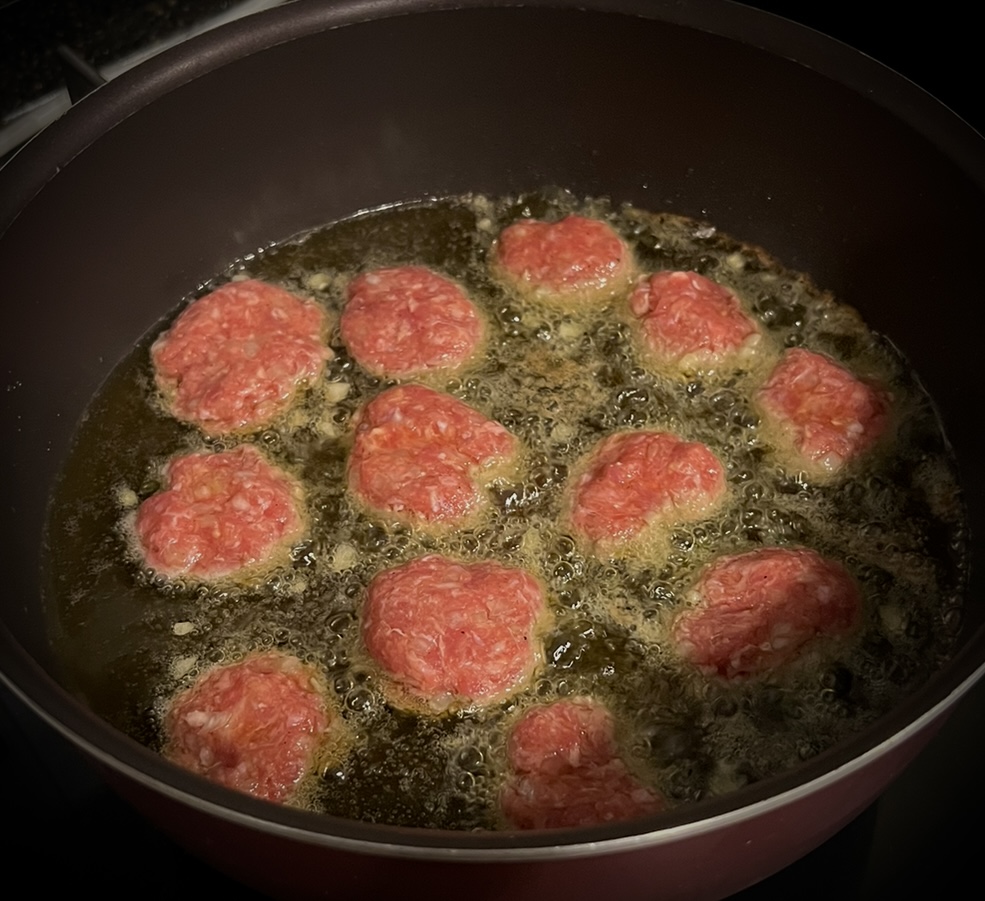
My prerogative in writing and sharing this recipe is to canonize my grandmother in lieu of ascribing to a monolithic history. In doing so, I hope to share space with more non-canonical histories and imaginaries to build a country, rewrite history. Here, in a country rendered borderless by virtue of migration. Here, in a history rendered imagined.
Egypt Migrations is always looking for people to contribute to our digital initiatives. Please contact team@egyptmigrations.com if you would like to join or support the organization.
Andrew Riad is a writing intern at Egypt Migrations. A Coptic Nubian Egyptian artist and poet, Riad is exploring the intersection of poetry, research and law. He works with textiles, text, filmography, photography, found objects, and culinary practices to undo a monolithic history and propose a [re]imagined and [re][un]written history revealing silenced narratives. Riad is a graduate of New York University Abu Dhabi (May, 2022) with a Bachelor of Arts degree in Literature and Creative Writing and Legal Studies and a current MFA (poetry) student at Pratt Institute (May, 2025).
 Egypt Migrations